
-

-
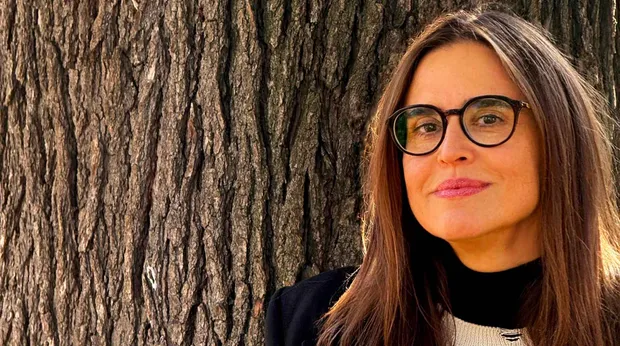
Debora Hirsch was born in São Paulo in 1967 and spent twelve years working as an engineer before committing fully to art. Her practice spans painting, video, digital installation, and algorithmic processes. Her works are primarily centered around on biodiversity preservation and endangered species, exploring how technology can be used to reconsider notions of life, memory, and disappearance. Seeking to restore the complexity of the real, her work intertwines botanical, ecological, historical, and cultural studies through a methodology grounded in investigation, reinterpretation, and theoretical reflection.
Each painting, beyond its aesthetic harmony, is to be analyzed, even decoded. Debora Hirsch seeks to create a balanced coexistence between seemingly unrelated worlds, both in time and space, in order to unveil hidden realities, subtle connections and similarities such as between the colonial period in America — particularly in Brazil — and the digital colonialism that reigns in the contemporary world. Hirsch's works are both harmonious and complex, born of an erudite and poetic construction from scattered and decontextualized elements: fragments of landscapes, architectural details, traces of traditional decorative motifs that unconsciously recall the microscopic life, scientific representations, decoded elements of digital language, algorithms, and elements borrowed from American colonial imagery.
Her recent research unfolds within the field of Plant Humanities, examining our shifting relationship with plant life. Her sources range from herbaria, scientific archives, rare books, illustrations, and digital repositories to textual materials, while dialogues with scientists, humanists, and botanists often inform the conceptual architecture of her oeuvre.
-
Debora Hirsch: Vanishing Trees
at Palazzo Citterio-Grande Brera, Milan -
Lucas Mertehikian on Debora Hirsch's Vanishing Trees
The video unfolds as a series of striking visual narratives that decenter the human perspective, opening instead a space of artistic and biological experimentation in which to imagine what the history of the world would look like if told by trees.
“‘Can plants speak?’ is a question that has obsessed biologists and philosophers alike, because what is ultimately at stake is how we relate to nature without fetishizing it. This millenia-old question also lies at the core of Debora Hirsch’s latest exhibition, Vanishing Trees, which opened in Milan, on January 15th at Palazzo Citterio, home to the Museo Nazionale dell’Arte Digitale. The opening was marked by a press conference featuring Debora Hirsch; Angelo Crespi, Director General of the Pinacoteca de Brera; Maria Paola Borgarino, Director of the Museo Nazionale dell’Arte Digitale; curator Clelia Patella; Martin Kater, Director of the Orto Botanico di Brera; and myself. The exhibition remains on view through April 15th. Through a digital video installation displayed on the LED wall at Palazzo Citterio, Hirsch reanimates three of the oldest and most endangered trees that live in the Milan Botanical Garden: Ginkgo biloba, Torreya taxifolia, and Pterocarya fraxinifolia. The video unfolds as a series of striking visual narratives that decenter the human perspective, opening instead a space of artistic and biological experimentation in which to imagine what the history of the world would look like if told by trees. This plant view is founded in the botanical and ecological specificities of each species, and yet the work is also deeply evocative. Or rather, it is evocative precisely because it emerges from an attentive and caring engagement with plant life, one that suggests the question may not be whether plants can speak, but whether we are capable of listening.”Lucas Mertehikian is a researcher at the New York Botanical Garden and Visiting Assistant Professor at Pratt Institute and contributed the text to Debora Hirsch’s video installation Vanishing Trees. -
Exhibition map
-
Selected Projects: Herbaria and Plant
When Albert Eckhout (1610–65)—court painter to Dutch governor-general Johan Maurits—set off for Northeast Brazil in 1636, it was his first venture outside of the Dutch Republic. Maurits, with whom Eckhout traveled, had a particular interest in natural history, and it would be Eckhout’s duty to capture the astonishing natural resources and general fecundity of seventeenth-century Dutch Brazil through his art. During the seven years that Eckhout would reside in Brazil, he created hundreds of drawings and oil studies that he would later use to paint exquisite still lifes. The excitement and allure of Eckhout’s initial encounters with untamed Brazilian flora seep from these paintings; his gleaming green coconuts, ripe melons, and luscious cashew apples convey a freshness and bounty that beckons to viewers, eliciting astonishment and encouraging them to taste and experience such exotic abundance for themselves. At the same time, paintings of the colony’s natural resources asserted the power and status of the Dutch Republic and its governor-general among the seventeenth-century aristocratic elite; the works created by Maurits’s court painters were given as gifts and ended up in the collections of King Frederik II of Denmark and Louis XIV in France, among others.[i]
Colonial conceptions of the natural world are embodied not just in the paintings of European travelers, but also in the collections formed by traveling biologists. The students of the Swedish biologist Carl Linnaeus (1707–78), for example, voyaged across the globe gathering plant species and naming them according to European systems of knowledge. The preserved specimens that these biologists amassed would, in many cases, form the basis of institutional herbaria that today continue to mirror asymmetrical power structures; the majority of plant specimens collected from the tropics—where, significantly, the most plant diversity naturally exists—are now housed in Europe and the United States.[ii] These botanical resources are perhaps even more crucial now than they once were; they can be used, for example, to understand the progress of invasive species, or to help guide conservation planning.
[i] Rebecca Parker Brienen, Visions of Savage Paradise: Albert Eckhout, Court Painter in Colonial Dutch Brazil, (Amsterdam: Amsterdam University Press, 2006), p. 25.
[ii] Park, D.S., Feng, X., Akiyama, S. et al. “The colonial legacy of herbaria,” Nat Hum Behav 7, 1059–1068 (2023). https://doi.org/10.1038/s41562-023-01616-7
-
Installation view of Herbaria at Hutchinson Modern, New York
-
Herbaria
Debora Hirsch"Ecosystems are intricate webs of life, interconnected and balanced by various dynamics that influence their survival. When one species disappears, it is never an isolated event, but often leads to a cascading effect. When plants become extinct in nature, it is not just the genetic code or the organism itself that is lost, but the entire symphony of relationships that allowed that plant to thrive. It is impossible to reconstruct that harmony in full. In my video animation HERBARIA, the plants have found representation in herbariums, a few remaining visual records of their existence. The very act of animating a plant from herbarium records acknowledges this profound absence: the plants I bring to life exist as solitary figures, disconnected from their original environments, flickering briefly before fading."
-
-
Debora HirschHerbaria (Trillium grandiflorum, New York State), 2024Inkjet print on archival paper, framed with Tru Vue Optium Museum Acrylic©7 x 7 in
17.8 x 17.8 cmNumber 3 of an Edition of 3 -
Debora HirschHerbaria (Fraxinus nigra, New York State), 2024Inkjet print on archival paper, framed with Tru Vue Optium Museum Acrylic©7 x 7 in
17.8 x 17.8 cmNumber 3 of an Edition of 3 -
Debora HirschHerbaria (Epigaea repens, New York State), 2024Inkjet print on archival paper, framed with Tru Vue Optium Museum Acrylic©7 x 7 in
17.8 x 17.8 cmNumber 3 of an Edition of 3 -
Debora HirschHerbaria (Arethusa bulbosa, New York State), 2024Inkjet print on archival paper, framed with Tru Vue Optium Museum Acrylic©7 x 7 in
17.8 x 17.8 cmNumber 3 of an Edition of 3
-
Debora HirschHerbaria (Hibiscadelphus stellatus, Hawaiian Islands), 2024Inkjet print on archival paper, framed with Tru Vue Optium Museum Acrylic©7 1/8 x 7 1/8 in
18 x 18 cmNumber 3 of an Edition of 3 -
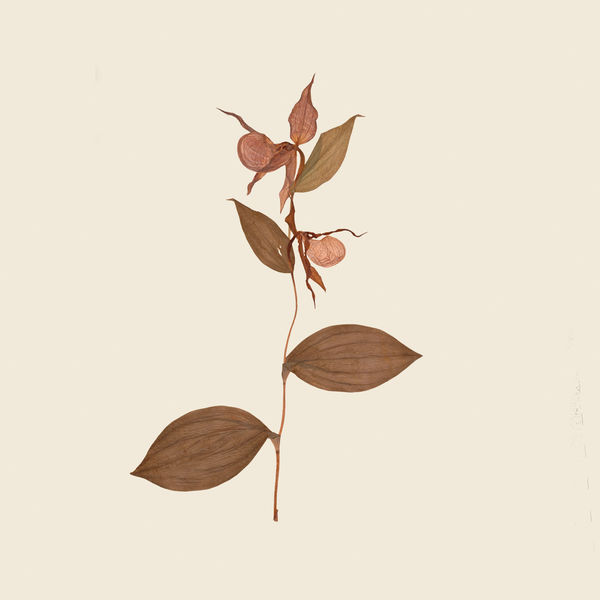
Debora HirschHerbaria (Cypripedium calceolus, New York State), 2024Inkjet print on archival paper, framed with Tru Vue Optium Museum Acrylic©7 x 7 in
17.8 x 17.8 cmNumber 3 of an Edition of 3 -
Debora HirschHerbaria (Castanea dentata, US), 2024Inkjet print on archival paper, framed with Tru Vue Optium Museum Acrylic©7 x 7 in
17.8 x 17.8 cmNumber 3 of an Edition of 3 -
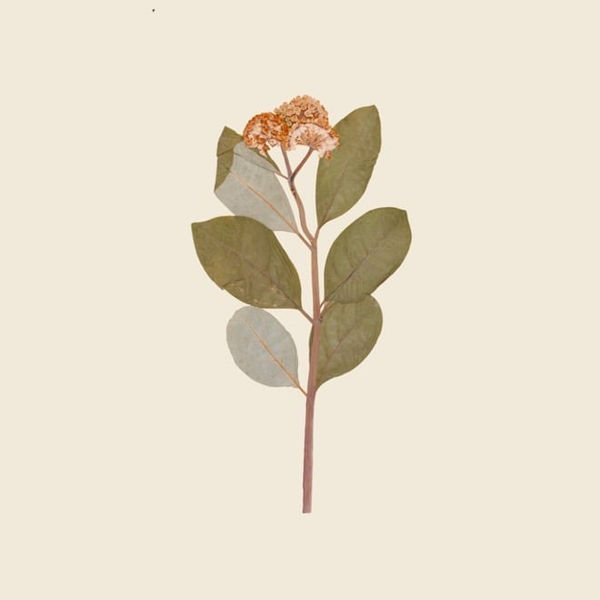
Debora HirschHerbaria (Asclepias variegata, New York State), 2024Inkjet print on archival paper, framed with Tru Vue Optium Museum Acrylic©7 x 7 in
17.8 x 17.8 cmNumber 3 of an Edition of 3
-
-
Excerpt of Debora Hirsch's video HERBARIA
In her video animation HERBARIA (2024), fragile petals, paper-thin leaves, and lithe stems flutter briefly in undefined space, almost assuming anthropomorphic qualities, before fading to white—a reminder that these species will soon only exist in memory. Hirsh often incorporates plants found in the regions where she exhibits, and thus calls for a reassessment of how we interact with—or utterly disregard—our immediate natural surroundings.
-
-
Plant
Debora HirschPlants represent the transitory nature of life and death, but they are also symbols of fertility, prosperity, regeneration, rebirth, and renewal in the cosmic cycle of nature. Mario Peixoto, the author of Limit, considered one of the most significant masterpieces in the history of Brazilian cinema, conveyed that "any human action against nature is useless." The Romans believed that "man may change, but nature remains the same." Although this may hold true in the long term over some centuries, biodiversity is far from static and depends on the conjunction and equilibrium of various elements. Unfortunately, biodiversity is experiencing a steep reduction in plant diversity.
In the silent embrace of nature, one discerns not merely a passive message but rather an impassioned plea, akin to a silent scream echoing through the wilderness. It crystallizes into form, sometimes taking on an animalistic guise, only to morph into a haunting semblance of humanity at other times. This enigmatic form leaves the observer utterly baffled as they endeavor to decipher the cryptic language underlying the fractured dialogue between two disparate kingdoms.
Amidst this profound contemplation, the observer is inevitably confronted with the sobering reality of humankind's relentless assault on biodiversity. Across the globe, ecosystems are being pillaged, habitats destroyed, and species driven to the brink of extinction by the heedless actions of humanity. The once vibrant tapestry of life is unraveling before our eyes, with biodiversity severed by the callous hand of exploitation and neglect. As the silent plea of nature echoes ever louder, it serves as a poignant reminder of the urgent need for humanity to reassess its relationship with the natural world and strive toward a path of restoration and harmony.
Species are currently vanishing before we can fully understand their characteristics. The International Union for Conservation of Nature (IUCN) Red List of Threatened Species assessments play a crucial role in providing valuable guidance in establishing protected areas, allocating funds, and influencing conservation decisions. Despite being the most comprehensive source on global extinction risk, the Red List covers only approximately 6% of around eight million plants, fungi, and animals.
My PLANT compositions may include frames, caves, landscapes, forests, architectural details, and monolithic birds that altogether emphasize the complexity of interconnections that belong to ecosystems, evoking the delicate equilibrium and transience of nature. If any elements of my compositions are eliminated or changed, the entire structure collapses aesthetically, paralleling the fragile equilibrium observed in ecosystems.
These contexts are not descriptive of the specific plant’s ecosystem. My plants know no borders; they live in imaginary worlds. The plants have a clear and special presence in the composition and high visual relevance as the true protagonists of the scene. I am not aiming for literal interpretations of the selected plant species; these remain as mere references. The plant representations lack seasonal consistency to highlight their most typical and recognizable elements.
My decision on which plants to represent hinges upon a range of factors, including available information about their history, cultural relevance, utility, extinction assessment, the cause of their imminent extinction, but above all, their beauty or peculiarity, to make my rendition artistically and aesthetically intriguing. The PLANT collection is open and can be constantly enriched with additional endangered species, ultimately reinforcing the message of the PLANT series about the dramatic range of extinction cases.
With this project, through beauty and harmony, I aim to bring attention to the loss of biodiversity and valuable ecological resources essential to our physical existence, balance, and spiritual development.
-
-
Debora Hirsch in the New York Botanical Gardens' "2025 Plant Humanities Conversations: Plant Extinction & Resurrection"
Organized through a collaboration between NYBG’s Humanities Institute and Dumbarton Oaks -
"FIRMAMENT: THE VAULT OF THE SKY, SOLID AND ABIDING, THE DWELLING OF CELESTIAL BODIES."
Debora Hirsch, February 20 - April 16, 2021, Hutchinson Modern & Contemporary -
-
Firmamento
(2018 - Present)Themes of power and control are salient in Debora Hirsch’s most expansive series to date, Firmamento. The chosen title refers to a biblical conception of the Earth’s makeup: in the Old Testament, it was believed that when God created the Earth, He created a solid dome (the “firmament”) which made up the sky and held the entirety of the visible cosmos.
Hirsch’s title is not necessarily religious. Rather, her poetic cosmological reference aims to uncover questions and ideas surrounding human perception, constructed worlds, colonizations, and bounded / boundless sensibilities. It is, in a sense, a meditation on the complex (and unequal) harmony of human life across varying temporalities, simultaneously replete with beauty and ugliness.
Primarily elaborated in painting and video, Firmamento ties together several themes in Hirsch’s practice via intricate configurations of her amassed archive. It is an ongoing project, which she describes as a culmination of her previous work’s conceptual underpinnings.
-
Historic rivers navigated by colonizers aimed at exploring and exploiting the land, generated the hugest slave traffic from Africa in history. Rivers are mixed with intrusive Colonial Architecture / objects.
Debora Hirsch on Firmamento (tree)
-
Videos
The lyrically unfolding imagery of the video art in the Firmamento series similarly works to uncover cross-temporal information from the colonial past and present, with heavy references to internet culture. In Hirsch’s titular video, Firmamento, the artist has created a visual that meditatively unfolds. As she juxtaposes footage from the natural world with colonial imagery, she layers dotted and geometric configurations generated by digital software. By placing these together, Hirsch emphasizes their constant recurrence and connections in the current time.
-
-
Donotclickthru
2016In the series Donotclickthru (2016), Debora Hirsch utilizes humor, irony, and the codified language of clickbait to create works that comment on the type of communication facilitated by the internet. Hirsch explores how technology allows for interactivity and the possibility of democratic conversations, it also asks users to pay a price: lack of privacy, overexposure, and a predicted provoked reaction.
Much like actual clickbait, they enticingly make reference to possible future knowledge through seemingly random images. Rather than potentially exploiting the internet user, these drawings leave the viewer in a humorously contemplative state. Originally presented via an interactive website, Donotclickthru straddles a space between the analog and the digital.
-
Accompanying donotclickthru, Hirsch created an Azulejo mosaic of an Otto Van Veen engraving originally published in Teatro Moral De La Vida Humana in the 16th century. Hirsch explains:
"The format of the book [Teatro Moral De La Vida Humana] follows the format of Internet today: an appealing image and a short text that attracts you to read the full content. Additionally, the image is a kind of paradox because you see the coloniser that wants to prevail over the colony dying". -
-
Colonialismi territoriali e digitali. Intervista a Debora Hirsch
ArtribuneDebora Hirsch presenta “Firmamento”, il suo ultimo progetto. Un lavoro composto da dipinti, video e “oggetti specchio” che sarà in mostra a Parigi alla galleria Dix9 dal prossimo 17 maggio. Artribune Television l'ha intervistata ...
-
Selected Projects
-
A collaborative project between Hirsch and Italian artist Iaia Filiberti, Not in My Backyard (Here Lies Henrietta Lacks) adressed systematic racism in science and medicine through the story of Henrietta Lacks, an African-American woman whose cancer cells were obtained without her consent, and went on to be used for life saving medical research. Lacks and her family were never formally credited nor compensated for the use of her biological material.
The installation displays scientific papers that repress the provenance of Lacks' cells. The central portrait and accompaning text is taken from the headstone epitaph dedicated to Lacks in 2010 after lying in a previously unidentified grave since her death in 1951.
Not in My Backyard (Here Lies Henrietta Lacks) comments on multiple issues regarding race, the ethics of human experimentation, and the immoral yet legal benefits and profits to medicine and science from the use of Lacks' cells.
Not in My Backyard (Here Lies Henrietta Lacks) was exhibited at the MOKA Museum of Contemporary art, Krakow in 2016, and at Smack Mellon, New York in 2020.
-
Framed is the result of an extensive research project taken upon by Hirsch and collaborator Iaia Filiberti when they come across a trove of old-Hollywood actress headshots. Together, they reconstructed the seemingly forgotten lives of 100 actresses stemming from these photographs. Framed presents Hirsch and Filiberti's discoveries, and formally introduces these women whose journey's reveal lives that came across vulnerabilities, discrimination, and lack of respect, all while chasing the American dream.
-
Comissioned by the city of Mirandola after a devastating earthquake which caused damage to many historical landmarks, Hirsch designed the panels of a kiosk located at the Piazza del Duomo, just outside of the town hall. The eight panels depict the interior of the Teatro Nuovo, which was damaged in the earthquake. Hirsch also depicts members of the Pico family, who were part of the nobility during the 16th century, seated in the theater boxes. This illustrous family and historical city landmark become a part of the city architecture, staring out into the actions of daily life.
-
BR-101
2008BR-101 Interview between Debora Hirsch and Gabi Scardi. View the photography series BR-101 by Debora Hirsch here
-
Selected books and visual references
Debora Hirsch refers to a massive collection of books, mostly writings and visual collections by artists, historians, anthropologists, and philosophers, to inform and inspire her practice.
-
Many of Hirsch's visual references are engravings by Otto Van Veen published in the book Teatro Moral De La Vida Humana, while others are paintings by Dutch painter Albert Eckhout, as well as painted ceilings found in colonial Brazilian churches.
-
Walkthrough
Debora Hirsch: FirmamentoWatch on VimeoWalkthrough of Debora Hirsch: Firmamento at Hutchinson Modern & Conteporary, March 2021.
-
-
-





Join our mailing list
* denotes required fields
We will process the personal data you have supplied to communicate with you in accordance with our Privacy Policy. You can unsubscribe or change your preferences at any time by clicking the link in our emails.